AI geometric coloring pages
Generate geometric pattern coloring pages with clean lines, tessellations, and mathematical shapes.
Geometric coloring uses precise straight lines, repeating polygons, and tessellations instead of organic or floral shapes. The clean, mathematical look attracts colorists who like structure and planning their color placement in advance, and it crosses into a modern, minimalist gift market that softer floral books miss. It pairs well with color-theory experiments, because the flat shapes make gradients and palettes easy to test.
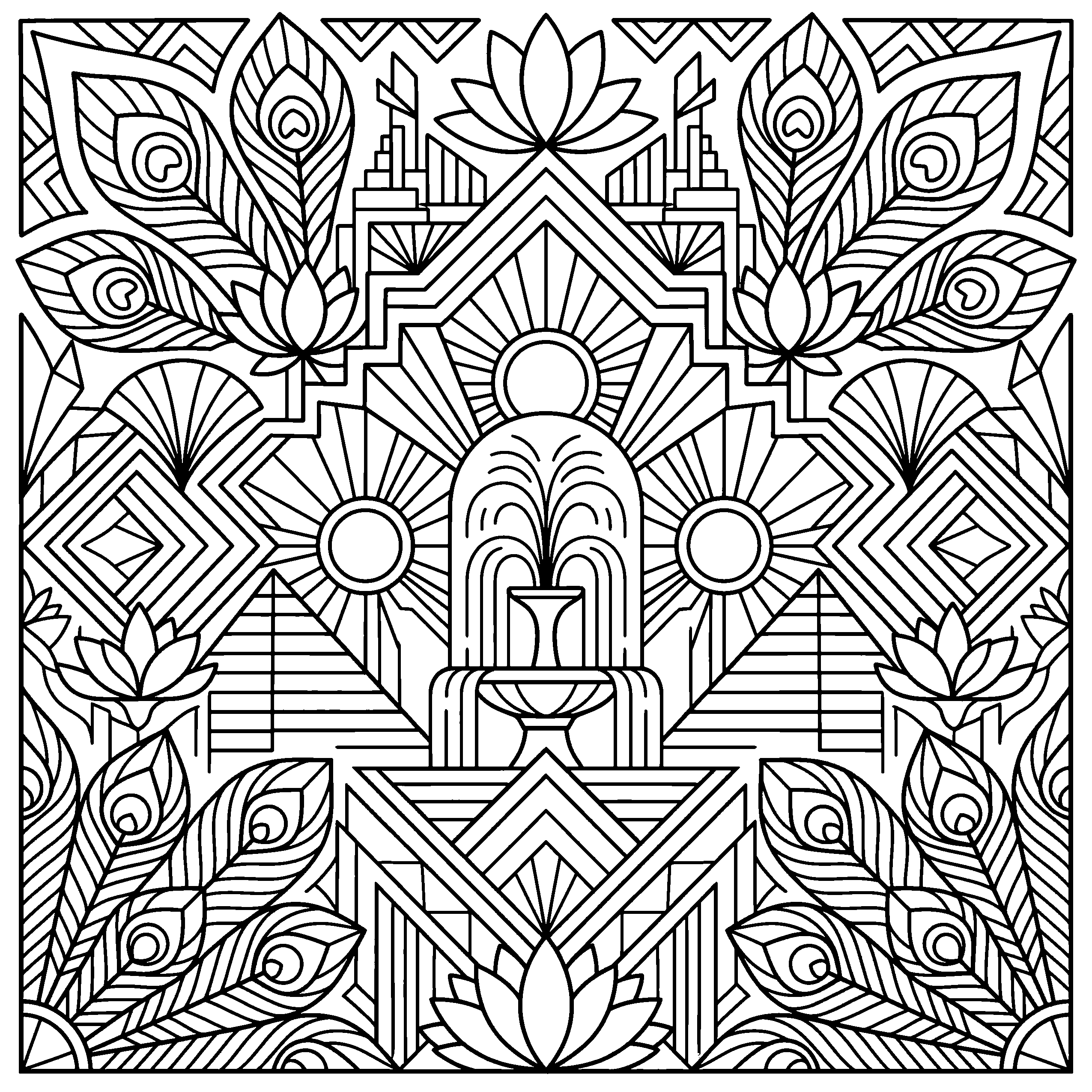
What defines geometric coloring pages
- Tessellating triangles and hexagons
- Optical-illusion and 3D cube grids
- Repeating polygon patterns edge to edge
- Sacred geometry (Metatron, Flower of Life)
- Angular abstract compositions
- Nested squares and diamond lattices
Best for: Adult colorists who prefer structure and planning over organic detail and work with pencils or markers, spanning simple large tessellations for markers to fine intricate lattices for pencils depending on the complexity you choose.
Geometric coloring book ideas that sell on KDP
- Optical illusion coloring book for adults
- Sacred geometry coloring book
- Geometric animals in low-poly style
- Modern minimalist geometric patterns
How to create geometric coloring pages
- 1
Describe your theme
Enter a theme like "ocean animals" or "botanical garden" and select the geometric style.
- 2
Preview and generate
See a preview page before committing. Then generate 30 to 120 pages in one batch.
- 3
Export for KDP
Download a print-ready PDF with correct bleed, trim size, and 300 DPI resolution.
Not sure how detailed to make the line art? The complexity selector maps your reader's age and coloring tool to an exact line weight, and the niche selection guide covers how to validate a geometric niche before you commit.
Frequently asked questions
- Who is the audience for a geometric coloring book?
- It draws colorists who like order and planning rather than freeform detail, plus a modern gift buyer who finds floral and mandala books too traditional. Sub-themes like optical illusions, sacred geometry, and low-poly animals each reach a distinct buyer, so choose one rather than mixing them in a single title.
- Can a geometric coloring book work for markers instead of pencils?
- Yes, and this is a way to differentiate. Larger tessellations and low-poly designs with wide flat areas suit alcohol markers, while fine lattices and dense sacred-geometry work suit pencils and fineliners. Decide which colorist you serve and keep the line weight and area size consistent across the interior.
- How do I make a geometric coloring book stand out?
- Precision is the product: straight lines that are actually straight and tessellations that tile without gaps read as professional, while wobbly or misaligned art looks amateur next to competitors. A strong angle such as optical illusions or 3D depth also gives buyers a specific reason to choose your book over a generic pattern pack.